16 November 2026
Flagship vs standard format store: telling them apart in satellite imagery
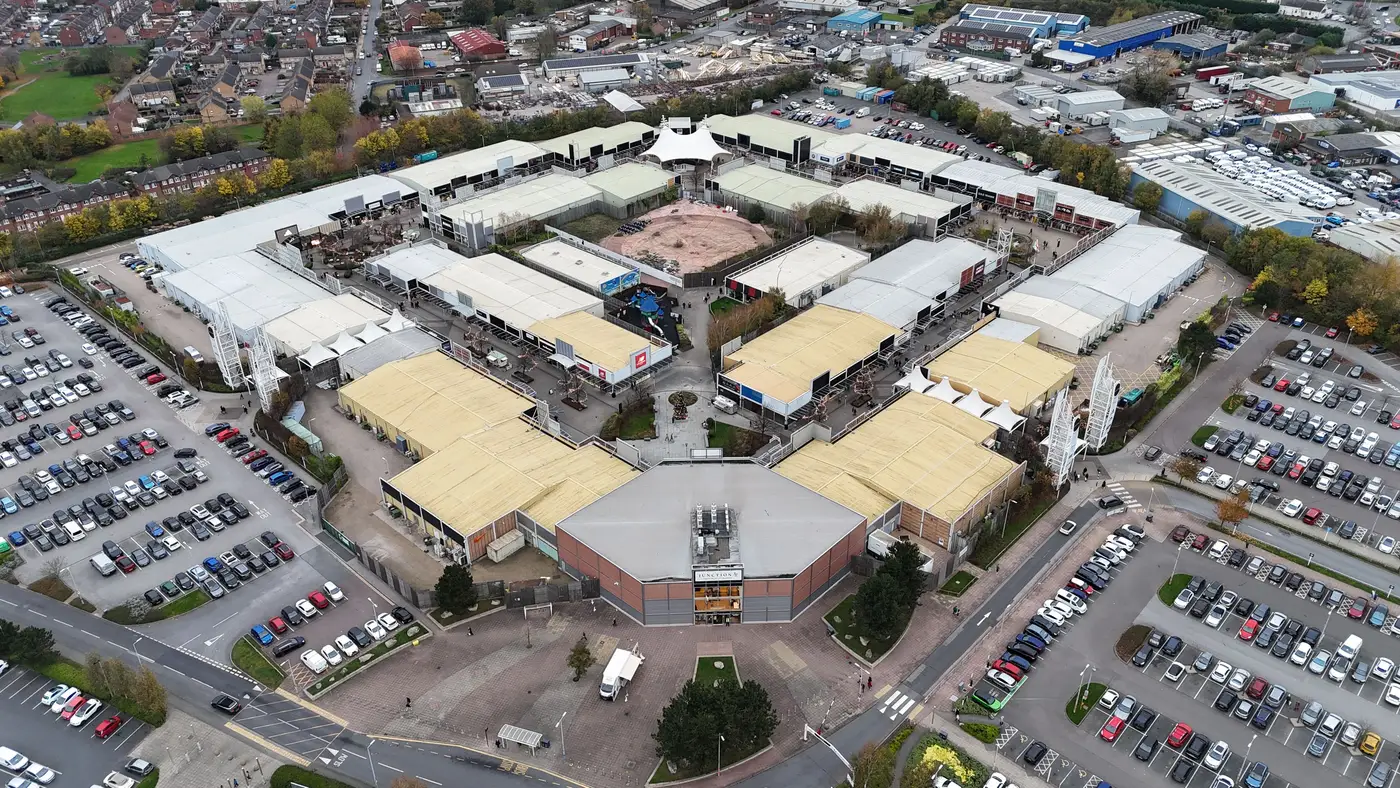
A store count from a locator page tells you a competitor opened somewhere. It doesn't tell you what they opened. A flagship and a standard-format box can sit a mile apart in the same trade area and look identical in a press release: "new location, City, State." In an aerial pass, they don't look identical at all, and the difference matters more than the headline count.
Format mix is the signal most trackers skip, because it's slower to pull than a store count and most store-locator scrapes don't carry footprint or site data at all. But a competitor shifting its roll-out from flagship-heavy to small-format infill, or the reverse, is telling you something about where they think the category is going. You just have to read the site, not the sign.
Why format mix matters more than store count
Twelve new stores in a quarter reads as aggressive growth until you split them by format. Two flagships and ten small-format infills is a different strategy than twelve flagships. The first is testing density in markets they already have. The second is a land grab in new metros, and it costs a lot more per door to sustain. A store-locator feed gives you the twelve. It won't give you the split, because that split lives in the building footprint and the parking field, not in the address.
This is also where trade press lags hardest. A flagship opening gets a press release. A standard-format store in a strip center usually doesn't, which means your read on format mix from secondary sources is already skewed toward the stores someone bothered to announce.
The footprint and parking tells
Footprint is the first thing to check, and it's the most reliable. A flagship runs noticeably larger than the chain's standard box, often by a wide margin, sitting as a standalone anchor rather than tucked into an inline strip. Measure the roofline against a known standard-format store from the same chain nearby and the gap is usually obvious without needing exact square footage.
Parking count and layout back that up. A flagship pulls a parking field sized for peak traffic and often weekend events, with multiple entry lanes and sometimes a dedicated overflow lot. A standard-format store shares parking with neighboring tenants in a strip center or sits on a lot sized tight to the box, no more than it needs.
Site position is the third tell. Flagships tend to take the pad closest to the main road, with their own curb cuts and signage monument. Standard-format locations show up mid-strip, between other tenants, reachable off a shared drive aisle. If a new store sits dead-center in a strip with four other storefronts on either side, it's not a flagship, no matter how big the parking lot looks from the road.
Loading bays, signage pads, and site layout
Loading dock size and count scale with format too. A flagship carries more dock doors, sometimes with a separate truck court cut away from customer parking. A standard store runs one or two bays off the back, shared with whatever else is on-site.
Signage pads tell you how the chain itself is betting on the location. A freestanding pylon sign at the road usually signals a location built to pull traffic from a wider radius, which tracks with flagship siting more often than not. A wall-mounted sign on a strip tenant space is the standard-format pattern almost every time.
None of these tells work in isolation, and they won't hold for every chain. Some retailers run a mid-size format that splits the difference on purpose, and a quarter-by-quarter pass over the same sites is what lets you build the baseline for a specific competitor rather than guessing from general rules. That's the part a one-off satellite look can't give you: the comparison against that chain's own normal footprint, store by store, as the estate grows.
That kind of quarter-over-quarter read across a named competitor's full estate, flagged by format and footprint before the trade press picks it up, is what Competitor Expansion is built to deliver. If format mix is the piece your current tracking keeps missing, it's worth seeing what a quarterly pass over the estate would have caught.