13 October 2026
How long between a planning application and a competitor's store opening?
If you track a named competitor's estate, you've probably asked this while staring at a planning portal: how much runway is there between that application landing and the doors opening? The gap depends on a handful of specific, knowable factors: decision timescales, pre-commencement conditions, and the build programme itself.
The planning stage itself isn't the long part
Statutory decision periods are short on paper. A minor retail application typically gets a target decision window of eight weeks, major schemes thirteen. In practice almost nothing moves that fast. Committee cycles, extensions of time agreed between applicant and case officer, and conditions attached to the consent all add weeks, sometimes months, before anyone can start on site. A scheme that needs a change of use, a highways consultation, or a Section 106 agreement can sit in pre-commencement limbo for the better part of a year after the headline "approved" date you saw on the register.
This is the stage most competitor-tracking still runs on: someone checks the local authority portal, logs the application, and waits. It tells you intent. It doesn't tell you when the till opens.
Site works to trading day: where the real variance lives
Once conditions are discharged and a contractor is appointed, the build itself is the more predictable half of the timeline. A standalone discount or convenience format on a previously cleared site can go from groundbreaking to trading in well under six months. A retail park unit with a shell-and-core fit-out, or anything involving demolition of an existing building, routinely runs closer to nine to twelve months. Anchor units and anything requiring a new access road or substation upgrade push further out again, and those utility connections are often the actual bottleneck, not the shopfitting.
The gap you're trying to estimate splits into two parts: planning-to-start-on-site, highly variable and driven by conditions and legal agreements, plus start-on-site-to-trading, more predictable and driven by format and scope of works. Add them together for a rough window, but treat the first half as the one that can blow out without warning.
Where the signal actually goes dark
The practical problem for anyone doing this estate-wide rather than for one site is this: planning registers tell you about intent, and store-locator pages tell you about completion, but almost nothing public tells you what's happening in between. A competitor can sit on a consented site for a year doing nothing, or they can have groundworks underway within weeks and a frame up by the time trade press picks up a soft-opening date. Planning portals don't distinguish between those two cases. You find out which one it was only when the shopfront goes up, or when a journalist does.
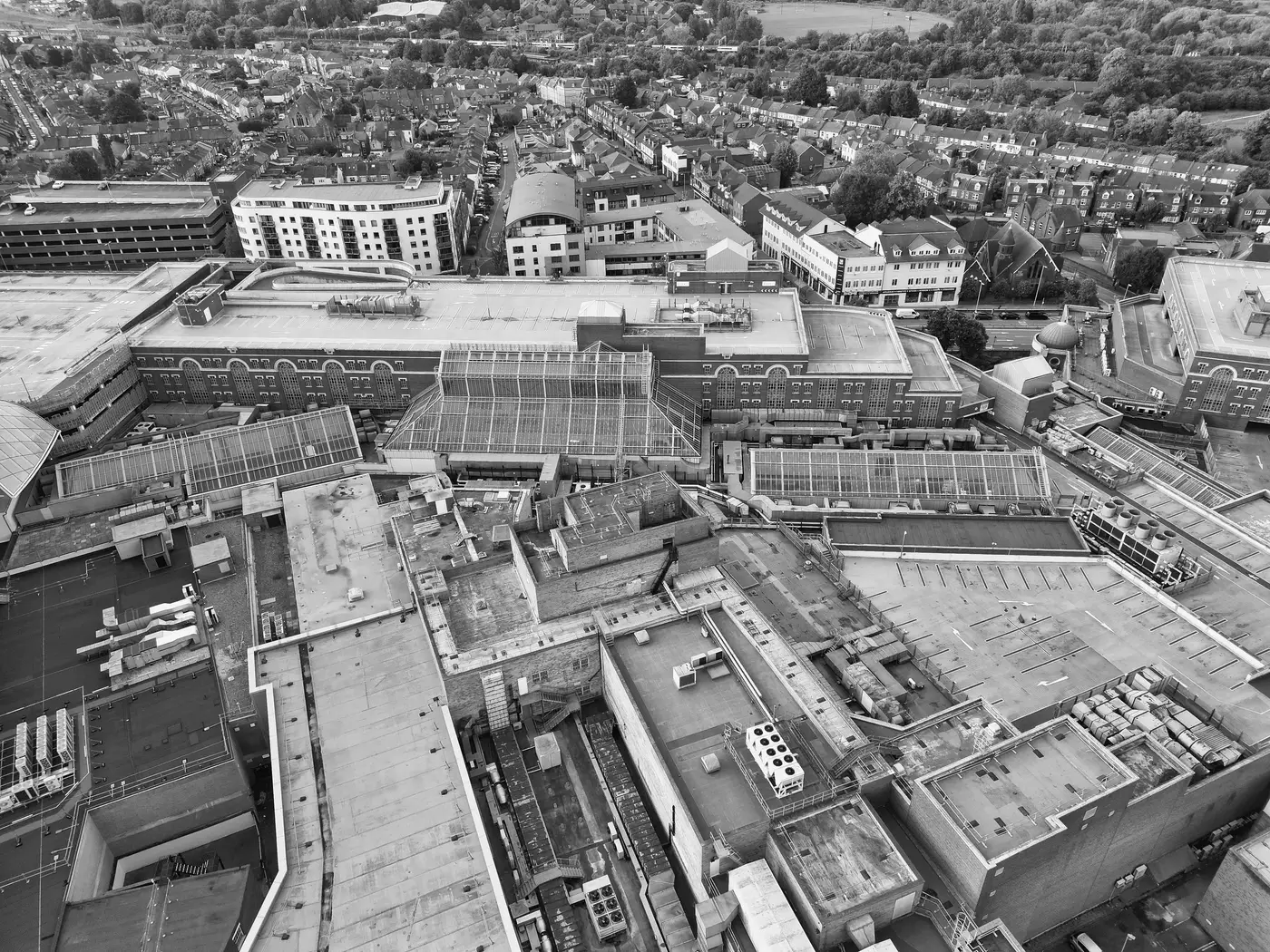
That's the window a quarterly pass over a competitor's estate is built to close. Instead of waiting on a store-locator scrape or a trade press mention that trails reality by months, a repeat high-resolution look at known sites and watchlist addresses catches groundworks, a new building footprint, or an extension to an existing unit as it happens on the ground, flagged by location and approximate footprint rather than by press release date. If you want to see how that change log works against a specific estate, the Competitor Expansion approach lays out what gets flagged each quarter and how.
A rough rule of thumb
For a standalone unit on a cleared site with a straightforward consent, expect somewhere in the region of nine months to just over a year from application submission to trading, with most of the uncertainty sitting in the pre-commencement conditions rather than the build. For anything larger, phased, or dependent on infrastructure works, double that estimate and treat it as a floor. Tightening that estimate for a specific site comes down to watching the ground itself, catching the point where intent turns into steel going up, a signal the planning register alone won't show you.
If you'd rather get that flagged automatically than keep refreshing the portal, it's worth seeing what a quarterly pass over the sites you're watching would have caught already.