7 October 2026
Refit or closure? Reading a dark store unit from satellite imagery
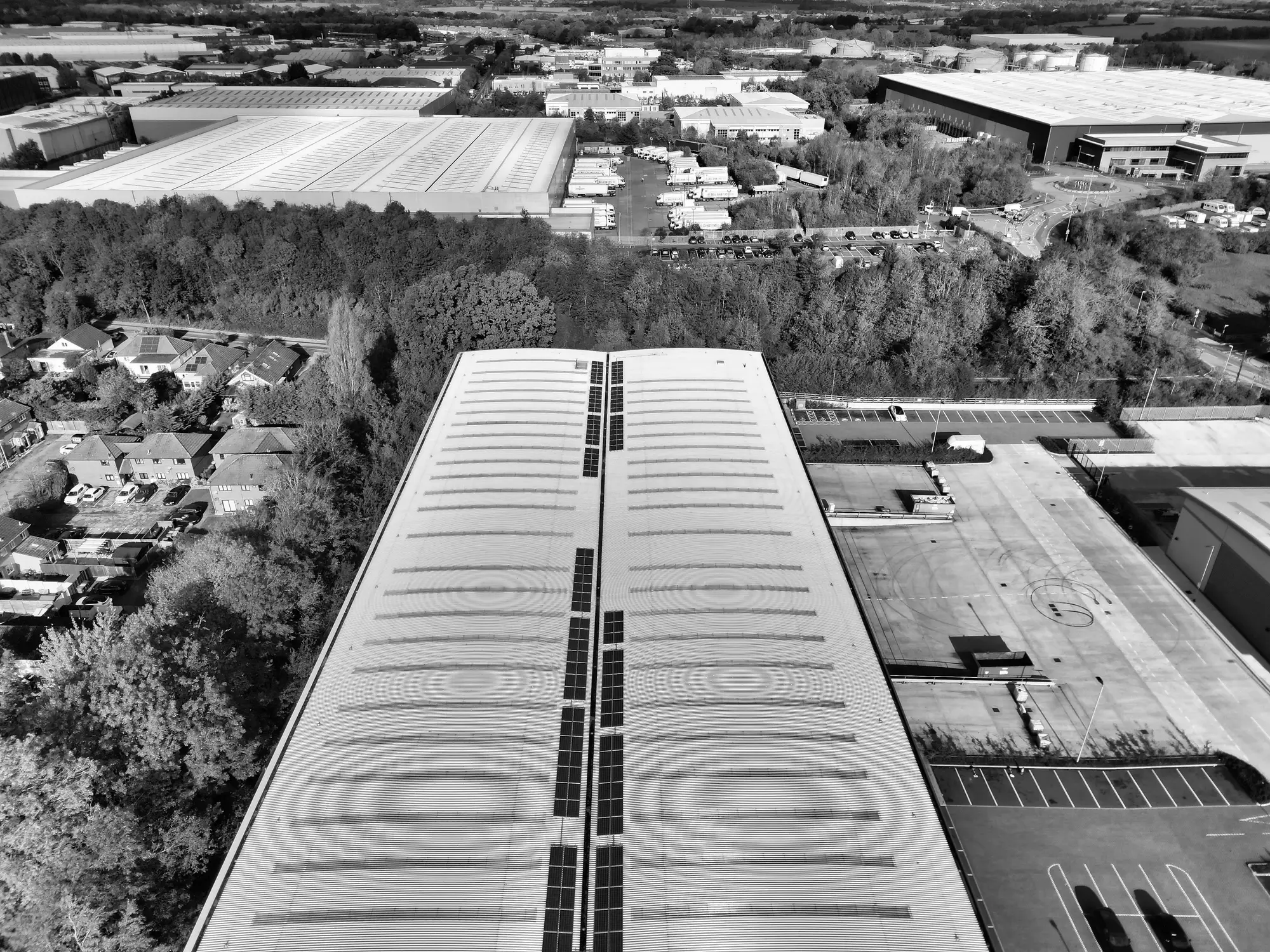
A unit goes dark on the quarterly pass. The question every analyst asks next: is this a closure, or is the fascia just blank while someone fits out a refurb behind hoarding.
One image rarely settles it. What settles it is the pattern across two or three passes, read against the kind of changes a refit leaves on the ground versus the kind a closure leaves.
What a refit leaves behind
A store undergoing a refit almost always keeps the bones of the building. The roofline doesn't change. The car park stays lined and in use, often with contractor vans and a skip near the loading bay rather than an empty tarmac. Hoarding or scaffolding frequently goes up around the entrance for a few weeks, visible as a rectangular shadow or added texture tight to the storefront. Signage sometimes comes down early, which is exactly the detail that spooks people into calling it a closure too soon. But the car park and the building perimeter tend to stay busy right through the works, because stock is still moving, staff are still parking, and neighbouring units in the same block carry on trading as normal.
The tell across passes: the footprint doesn't shrink or get fenced off wholesale, and a quarter or two later the roof looks the same with a fresh join where the old sign used to sit.
What a closure leaves behind
A genuine closure behaves differently. The car park empties out and stays empty, pass after pass, not just for a few weeks of works. Loading bays stop showing any use at all. If the unit sits in a retail park, the anchor's own pylon signage sometimes comes down without anything going up in its place, and nearby units in the same scheme start thinning out too, because co-tenancy clauses mean smaller tenants leave once the anchor goes. Weeds show up in the parking lines inside two or three quarters, a slower tell but a reliable one.
The real clincher is what happens over two to three quarters, not one. Refits resolve. The unit reopens, sometimes under the same fascia, sometimes rebranded. A closure doesn't resolve. It just sits there getting quieter, or the box eventually gets demolished and re-platted for something else, which is the one signal that's unambiguous on sight.
Reading a dark unit without ground truth
The catch with a single high-res pass is that a dark unit mid-refit and a dark unit mid-closure can look identical for six to ten weeks. No signage. A quiet car park that could just be contractors on a long lunch. That ambiguity is exactly why store-locator scrapes and trade press lag so badly on this kind of call: they're reactive. A trade write-up or a quietly updated locator page usually doesn't appear until the operator wants it known, often well after the lease has turned over on the ground.
What actually resolves the question is holding the same unit across a sequence of passes and watching the parking pattern, the loading bay activity, and the building envelope itself, rather than trying to call it off one snapshot. A unit still dark with an empty car park three quarters after it first went quiet is a closure. One that reopens under a new sign by the second pass was always a refit.
That's the judgment call our quarterly change log is built around at Competitor Expansion, flagging new, extended and closed units with location and approximate footprint from one high-res pass to the next, so a dark unit doesn't sit in limbo until a press release settles it for you.
If a unit on a rival's estate just went dark, that's exactly the kind of call our quarterly pass is built to make for you.