14 October 2026
How to tell a store relocation from a closure in a competitor's estate
A unit goes dark. The locator listing disappears. Is that a closure, or has the fascia just moved three miles down the ring road? Get that wrong across a few dozen sites a year and your whole read on a competitor's estate is off. You'll report contraction where there's actually a trade-area shuffle underway, or miss that they've quietly pulled out of a catchment you thought they were committed to.
Neither a store locator nor trade press is built to answer this question fast. Locators update on their own schedule, sometimes weeks after a unit closes, and a relocation often shows up as one listing simply replacing another with no flag that they're the same store. Trade press runs on net new openings and headline closures. Quiet in-market moves that don't shift headcount rarely get a mention. If you're trying to tell a relocation from a closure using only those two sources, you're mostly reconstructing it after the fact.
The signals that separate the two
A few things tend to distinguish a relocation from a straight closure, and most of them are visible well before any announcement:
Timing overlap. A relocation usually has a new unit fitting out or opening within the same quarter the old one goes dark, and inside the same trade area or an adjacent one. A closure has a gap: the old unit sits empty, often for months, with nothing comparable opening nearby.
What happens to the shell. A unit being vacated for relocation often keeps its signage up longer and gets a lighter strip-out, because the retailer isn't trying to erase the brand from that spot, just move it. A genuine closure tends to get the full clearance treatment: fixtures out, signage down, "everything must go" rather than "find us at our new location."
Footprint and format. If the new unit a mile away is a materially different size, say a 15,000 sq ft format replacing an 8,000 sq ft one, that's not really a like-for-like relocation anymore. It's closer to a format upgrade or a cannibalization play, and you'd want to log it as both an opening and a closure rather than netting them off.
Distance from the old site. A relocation inside the same catchment is a defensive move, protecting share in a trade area. A new store two towns over that happens to open the same quarter as an old closure somewhere else is probably unrelated expansion, even if the dates line up.
A long gap between closure and a nearby opening could mean a planning delay rather than a genuine closure, so none of these signals is conclusive on its own. The read gets more reliable when you can see the shell and the new build in the same pass, rather than piecing it together from a locator snapshot plus a council planning notice six weeks apart.
Why this matters more than it looks like it should
Miscounting relocations as closures inflates your picture of a competitor's retreat from a region. Miscounting them as straight openings does the opposite: it makes a defensive reshuffle look like aggressive expansion. Either error feeds into site selection and cannibalization modeling downstream, and both are hard to catch later because the net store count often looks the same either way.
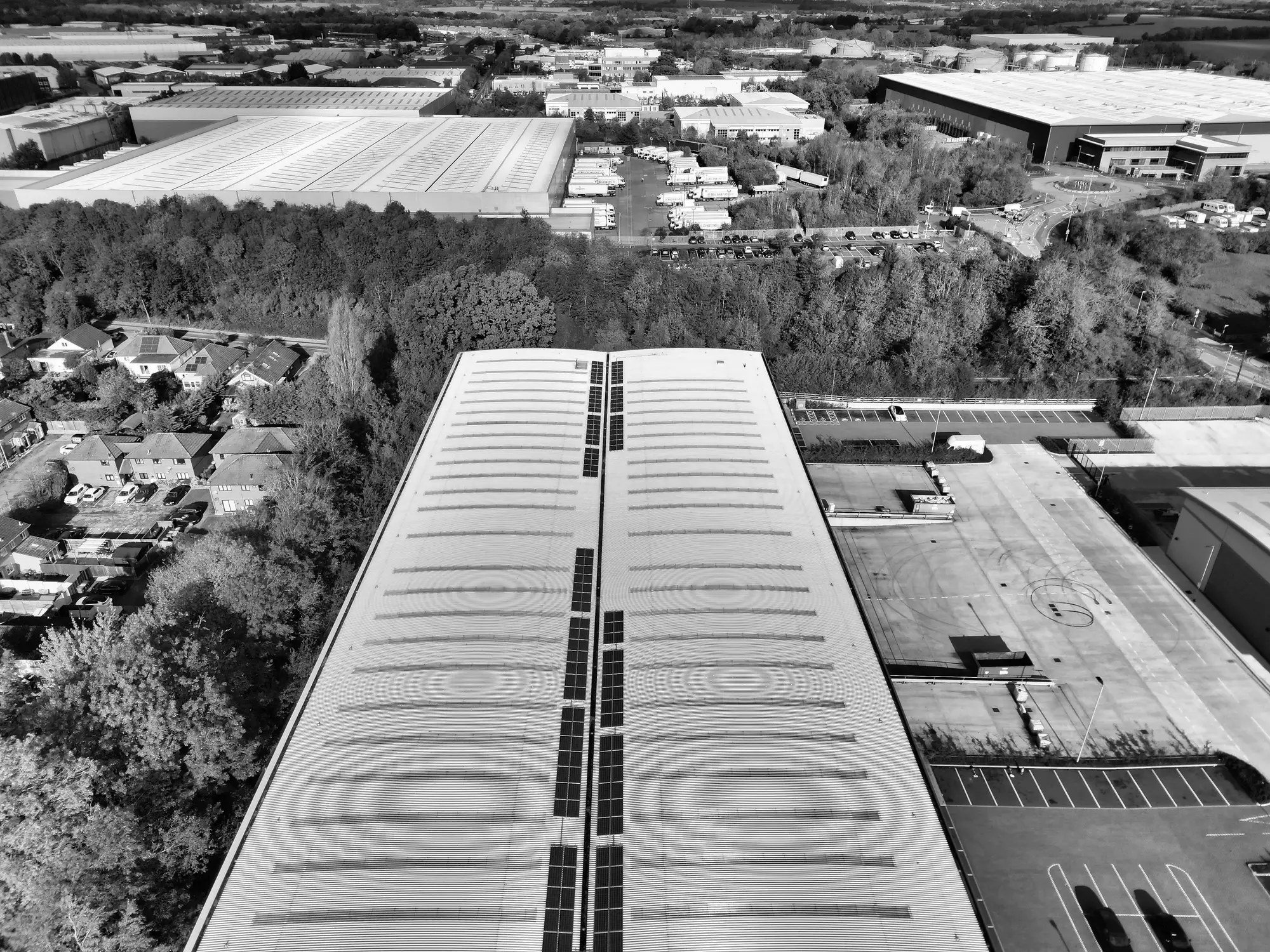
This is exactly the gap a quarterly image pass over a competitor's estate is built to close. A high-resolution look at the same footprint each quarter shows you the old unit's shell condition, whether a new build is under construction nearby, and roughly what footprint that new build is, all in the same dataset rather than stitched together from a locator scrape and a press clipping. Competitor Expansion turns that into a change log each quarter: new, extended, or closed, with location and approximate footprint, so a relocation reads as a relocation instead of showing up as an unexplained closure three towns away from an unexplained opening.
If you're tired of guessing which one you're looking at from a locator snapshot, that's the gap this is built to close.